September 3, 2026
Building a Laboratory from the Ground Up
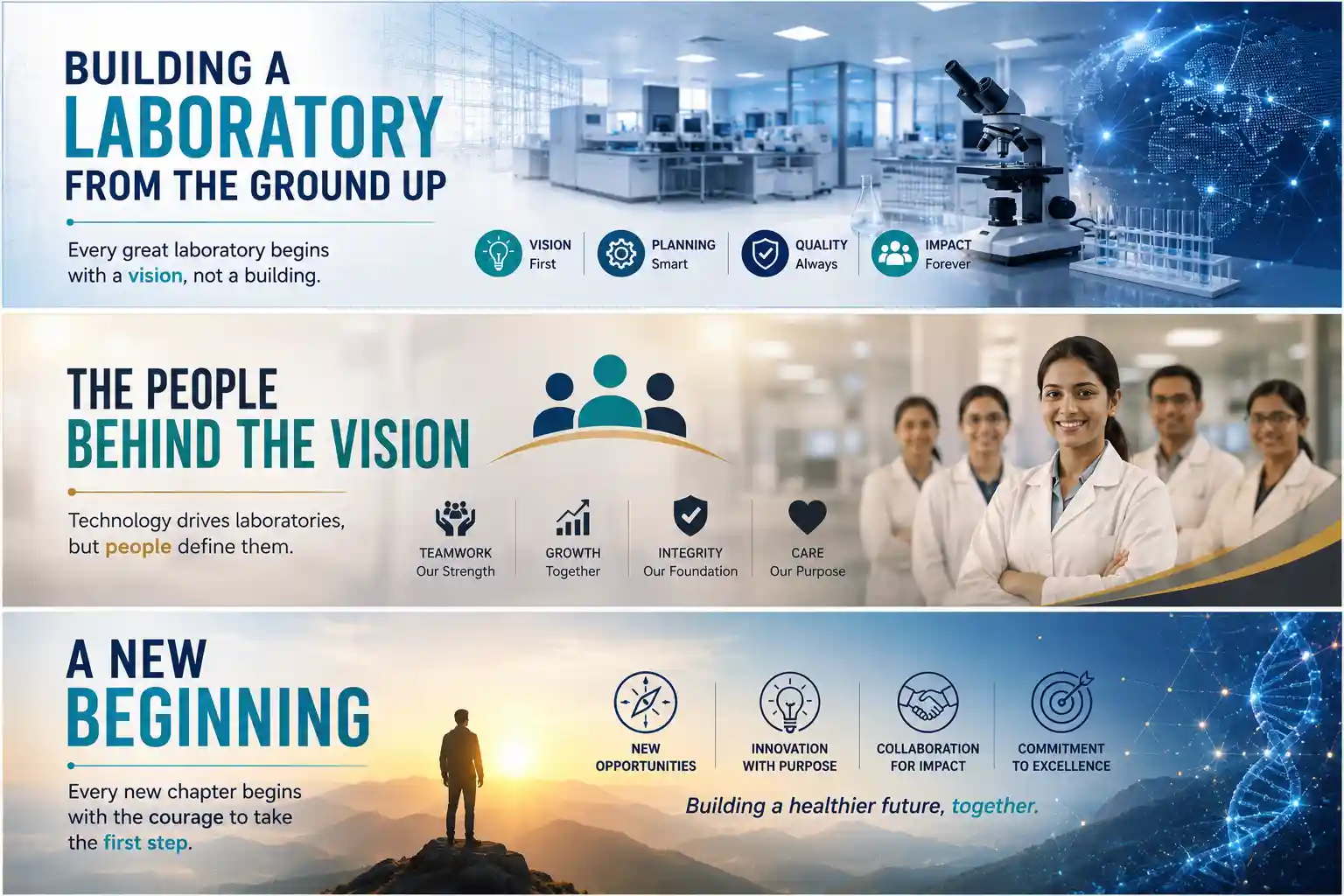
Every great laboratory begins with a vision, not a building.
Building a laboratory is often perceived as a process of acquiring sophisticated instruments, installing advanced technology, and designing modern infrastructure. In reality, those are only the visible components of a much larger journey. A successful laboratory is built on thoughtful planning, unwavering commitment to quality, and a clear understanding that every decision ultimately affects patient care. From selecting the right location and designing efficient workflows to establishing quality systems, recruiting skilled professionals, and creating a culture of continuous learning, every step contributes to the foundation of diagnostic excellence. From the earliest planning stages through daily operations, careful attention to processes ensures reliability, safety, efficiency, and clinical relevance.
Throughout my career in laboratory medicine, I have learned that laboratories are not built overnight, nor are they defined by the sophistication of their equipment alone. They are shaped by the people who believe in a common purpose and are willing to work patiently through every challenge that accompanies a new beginning. Every successful laboratory has a story of persistence: overcoming financial constraints, operational hurdles, regulatory requirements, technological evolution, and the constant pursuit of higher standards. There are moments of uncertainty, difficult decisions, and unexpected setbacks, but these challenges often become the very experiences that strengthen the organization and define its character.
Looking back, I have come to appreciate that building a laboratory is not simply about creating a diagnostic facility; it is about building trust. Every correctly processed specimen, every accurate report, every clinician who relies on our expertise, and every patient whose treatment is guided by our work reinforces that trust. The true measure of a laboratory is not the number of tests it performs but the confidence it inspires among patients, clinicians, and the community it serves. A laboratory built on strong values, scientific integrity, and a commitment to excellence becomes far more than a workplace; it becomes a lasting contribution to better healthcare.
The People Behind the Vision
Technology drives laboratories, but people define them.
Behind every successful laboratory stands a dedicated team whose contributions often remain invisible to the patients they serve. While clinicians and pathologists may sign the reports, the journey of every specimen involves reception staff, phlebotomists, technicians, technologists, quality managers, housekeeping personnel, logistics teams, information technology specialists, biomedical engineers, and administrative professionals. Each individual plays an indispensable role in ensuring that every sample is collected correctly, processed safely, analyzed accurately, and reported on time. Laboratory medicine is one of healthcare's greatest examples of teamwork, where success depends not on individual brilliance but on collective commitment.
One of the most rewarding aspects of leadership has been watching people grow alongside the organization. Skills can be taught, but integrity, curiosity, accountability, and compassion are qualities that define truly exceptional professionals. Creating an environment where individuals feel respected, encouraged to learn, and empowered to contribute has always been as important to me as investing in new technology. When people understand that their work directly influences patient care, routine tasks gain purpose, and excellence becomes a shared responsibility rather than an imposed expectation.
As laboratories continue to adopt automation, artificial intelligence, and digital technologies, it is easy to assume that machines will become the defining feature of future diagnostics. I believe the opposite is true. Technology will continue to enhance laboratory performance, but it will always be guided by people who interpret results, solve problems, innovate, mentor others, and uphold the ethical standards of healthcare. The greatest strength of any laboratory will never be its instruments; it will always be the dedication, professionalism, and shared vision of the people working behind them.
A New Beginning
Every new chapter begins with the courage to take the first step.
Every meaningful journey reaches a point where experience meets opportunity and a new chapter begins. After spending decades building, leading, and transforming diagnostic services, I have come to realize that every achievement also creates the foundation for something greater. A new beginning is not about leaving the past behind; it is about carrying forward the lessons learned, the relationships built, and the values that have shaped the journey. It is an opportunity to reimagine what diagnostic medicine can become and to contribute in new ways through innovation, education, leadership, and collaboration.
Healthcare is changing at an extraordinary pace. Advances in molecular diagnostics, artificial intelligence, digital pathology, precision medicine, and connected healthcare are redefining how diseases are diagnosed and managed. These developments present exciting opportunities, but they also demand thoughtful leadership and a commitment to ensuring that innovation remains focused on improving patient outcomes. Every initiative, whether operating a laboratory, mentoring future professionals, or exploring emerging technologies, serves the same fundamental purpose: to make diagnostics more accurate, more accessible, and more meaningful for the patients who depend on it.
For me, PathMole Expert is more than another professional project; it is a continuation of a lifelong commitment to advancing diagnostic medicine. It is an invitation to build, to teach, to collaborate, and to keep learning in a field that never stands still. The future will undoubtedly bring new challenges and remarkable innovations, but the principles that guide meaningful healthcare remain unchanged: scientific integrity, continuous improvement, teamwork, and an unwavering focus on patient care. Every new beginning offers the opportunity to make a lasting difference, and I believe the most meaningful chapters are often the ones that are still waiting to be written.